
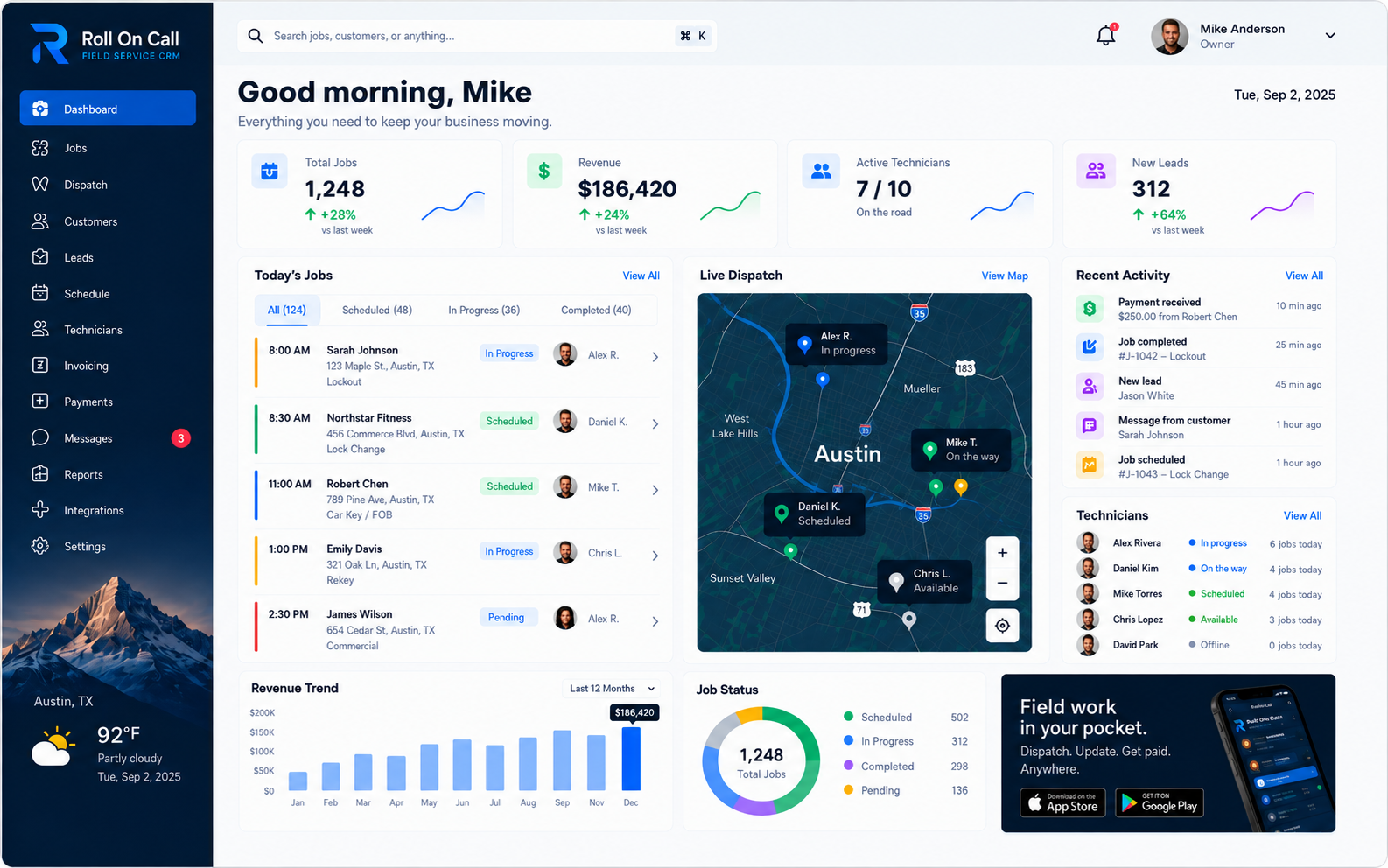
Introduction to Field Service Dispatching
Dispatching field technicians is a consistent habits that requires clear communication, structured data, and human judgment. It connects a customer request with a staff-selected technical resource while accounting for job requirements, recorded commitments, local conditions, and qualification checks. Software can organize that context, but the dispatcher makes the assignment. The dispatcher weighs competing priorities, balances scheduled maintenance with urgent work, and confirms current conditions directly when the recorded schedule is not enough.
This guide provides a comprehensive overview of how to dispatch field technicians effectively. We will cover every step of the workflow, from the initial customer intake call to the final invoice and payment status. This methodology is foundational for any growing service organization looking to scale its field operations without sacrificing quality or control.
The Intake Process
The dispatch workflow begins the moment a customer contacts the office. This is known as the intake process. It is a critical data gathering phase where the dispatcher must collect accurate, factual information about the requested service. The dispatcher starts by searching the system to determine if the caller is a new or returning customer. If they are a returning customer, the dispatcher verifies their contact details and reviews their historical records. If they are a new customer, the dispatcher must create a clear, accurate profile.
The most important step during intake is confirming the physical service address. A billing entity may own multiple properties, so the dispatcher must explicitly ask where the technician needs to go. They must never assume the billing address is the service address. Once the address is confirmed, the dispatcher must extract a clear scope of work from the customer. They must ask clarifying questions to understand the exact nature of the problem, the equipment involved, and any physical access constraints. Vague descriptions like a simple notification that a unit is broken are unacceptable. The dispatcher must record detailed, actionable notes that will eventually guide the technician. The accuracy of the entire dispatch process depends heavily on the diligence applied during this initial intake conversation.
Job Creation and Record Context
After gathering the necessary details during intake, the dispatcher proceeds to job creation. This step translates the customer request into a shared record. The dispatcher uses their dispatch management software to create the job and select the applicable service location confirmed during intake. The job record then holds the information entered for that specific service visit.
The dispatcher populates the ticket with the customer-reported scope and relevant history available to authorized staff. Human review is vital. The dispatcher can examine prior job records for recurring issues or access and safety context, then decide which current details belong in the new record. This process gives the technician useful job context before arrival. Incomplete or unclear records increase the risk of confusion, so job creation should follow a consistent review procedure.
Understanding Schedule Context
With the job ticket created, the dispatcher must determine when the work can be performed. This requires a deep understanding of the current schedule context. The dispatcher examines the scheduling board to view the existing commitments for the day, the week, and the month. They must identify available time blocks that accommodate the estimated duration of the new job. However, schedule context is more complex than simply finding empty space on a calendar.
The dispatcher must consider the geographic density of the existing appointments. Scheduling a job on the east side of town immediately after a job on the west side of town introduces massive, unbillable travel time. A skilled dispatcher actively manages the schedule context to group jobs in similar geographic zones, minimizing windshield time and maximizing productive labor. They must also account for the nature of the work already scheduled. If a technician has three grueling, physically demanding installations assigned for the morning, the dispatcher might choose to assign them a lighter maintenance task in the afternoon to prevent fatigue. Understanding schedule context means viewing the board as a dynamic puzzle that requires constant human adjustment to maintain efficiency and field staff well-being.
Evaluating Technician Availability Context
While evaluating the schedule, the dispatcher also reviews technician availability context. This includes recorded commitments, working hours, job requirements, and staff-confirmed qualifications. The responsible staff member follows the business's qualification process and confirms current circumstances when needed before making an assignment.
Availability context also includes team-recorded updates on currently assigned jobs. Those entries, together with live technician location on the dispatch map, can indicate that the recorded plan may need review. Neither is verification of the work itself, and device location is not guaranteed to be precise. When timing is important, the dispatcher contacts the field team to confirm the situation, then decides whether an appointment or assignment should change.
Dispatcher Decision-Making
The culmination of the intake process, job creation, schedule analysis, and technician availability evaluation is the moment of dispatcher decision-making. This is the critical juncture where the operator commits a resource to a task. The dispatcher must synthesize all the gathered data and make an informed judgment call. They weigh the urgency of the customer request against the constraints of the schedule. They balance the need for geographic efficiency against the requirement for specific technical skills.
Roll On Call presents the schedule and job context so the dispatcher can make the assignment. A recorded profile or schedule cannot independently confirm a technician's current condition, qualifications for the specific work, or the effect of local conditions. The dispatcher applies staff-reviewed information, direct communication, and judgment before selecting and confirming an assignment.
The Assignment Protocol
Once the dispatcher makes a decision, they record the chosen technician on the job as part of the technician scheduling workflow. The dispatcher updates the schedule board with the planned time and assignment. This gives authorized office users a shared view of the recorded commitment and helps them notice potential conflicts during later review.
A clear assignment protocol is essential for organizational alignment. Every staff member must trust that the schedule board represents the factual reality of the day's plan. When a dispatcher assigns a job, they take responsibility for the logistical feasibility of that assignment. They must verify that the technician has adequate time to complete their previous job, travel to the new location, and execute the required scope of work before the end of their shift. Rushing the assignment protocol leads to unrealistic schedules, stressed technicians, and late arrivals. Therefore, the dispatcher must follow a disciplined procedure, double-checking their assumptions before finalizing the assignment and initiating communication with the field.
Transmitting SMS Job Briefs
After the assignment is recorded, the office can prepare an SMS job brief for the technician. The sender reviews selected job details such as the customer name, service location, customer-reported scope, and relevant notes. The office stays in charge of deciding which information is appropriate to send and for using another communication method when confirmation is necessary.
Depending on the device and its settings, the address may be usable with a navigation application. Delivery timing and reading are not guaranteed. The dispatcher cannot assume a message was received simply because it was sent, so urgent instructions require the business's established confirmation procedure.
Managing Schedule Changes
The field service environment is inherently unstable. Jobs take longer than expected, technicians encounter heavy traffic, and customers cancel appointments at the last minute. Therefore, managing schedule changes is a constant and demanding part of the dispatcher's role. A static schedule rarely survives contact with reality. The dispatcher must continuously monitor the board and adjust assignments as conditions evolve.
If a technician is delayed on a morning repair, the dispatcher must proactively contact the afternoon customers to reset expectations. If the delay is severe, the dispatcher may need to reassign the afternoon jobs to other available technicians to prevent a total schedule collapse. This requires rapid analysis of both schedule context and technician availability context. The dispatcher must communicate these changes clearly to both the customers and the field staff. Moving a job without informing the originally assigned technician causes confusion and wasted travel time. Effective schedule management requires vigilance, clear communication protocols, and a willingness to dismantle and rebuild the day's plan as necessary. It is a highly active process that relies on the dispatcher's ability to remain calm and decisive under pressure.
Handling Emergency Work
Emergency work can disrupt a planned schedule. When an urgent request arrives, the dispatcher follows the business's triage procedure while still confirming the service location and customer-reported circumstances. Staff then review recorded commitments, qualification requirements, availability context, and local conditions before choosing how to respond.
Roll On Call does not perform route optimization or automated dispatch. The dispatcher uses staff-reviewed schedule context and direct communication to make the assignment. If the decision affects planned work, the office records the changes, contacts affected customers, and sends updated instructions through the appropriate channel. Human review remains necessary because the board cannot independently know unreported field conditions.
Tracking Team-Recorded Statuses
Team-recorded statuses provide additional context about the job lifecycle. The business defines which authorized users record updates, what its status labels mean, and when direct confirmation is required. These entries describe what the team recorded and do not independently verify a technician's location or activity.
A dispatcher can compare team-recorded statuses with the planned schedule and investigate an apparent delay. The status is a prompt for review, not ground truth. If an update is missing or stale, the dispatcher contacts the field team before changing later commitments. Clear ownership and consistent entry practices make the recorded context more useful.
Reviewing Completion Context
When a technician finishes the physical labor, the job is not yet fully closed. The technician must provide completion context to the office before leaving the site. This involves writing clear, factual notes detailing exactly what was repaired, what parts were used, and what condition the equipment was left in. They must also document any secondary issues they discovered during their visit, even if those issues were not part of the original scope of work.
This completion context is permanently stored in the field service CRM, becoming vital historical data for future dispatching. The dispatcher reviews this completion context to ensure the job was handled appropriately and to identify opportunities for follow-up service. If the technician notes that a unit is nearing the end of its lifespan, the office can proactively schedule a replacement consultation. Without thorough completion context, the office is left guessing about the outcome of the visit, and the customer's historical record remains incomplete. This final transfer of knowledge from the field back to the office is essential for maintaining the integrity of the business.
Invoice and Payment Status
Dispatch is not finished until the job is billed. Once the technician marks the work complete, the job becomes an invoice with the customer, address and line items already filled in.
Customers can pay by card through Stripe. The dispatcher can then see which completed jobs are paid and which need a follow-up call, without leaving the board.
Training Dispatch Personnel
The success of the entire dispatching framework relies heavily on the competence and training of the individuals managing the schedule. A service business cannot simply hand a new employee a login to the software platform and expect them to coordinate a mobile workforce effectively. Rigorous, structured training is an absolute requirement. Dispatch personnel must be trained on the specific procedures of the company, including the exact steps required for the intake process, the assignment protocol, and the handling of emergency work.
They must learn how to interpret schedule context and technician availability context accurately. Furthermore, dispatchers require extensive geographic training. They must understand the local service area, major traffic patterns, and the realistic travel times between different neighborhoods during various parts of the day. Software maps provide a visual aid, but they cannot replace a dispatcher's internalized knowledge of the region. Additionally, dispatchers must be trained in conflict resolution and customer service, as they are often the primary point of contact for frustrated customers experiencing scheduling delays. Investing in comprehensive training for dispatch personnel is the most effective way to improve scheduling efficiency, reduce technician frustration, and elevate the overall quality of the service operation. A highly trained human dispatcher is the most valuable asset a field service business can possess.
Conclusion and Best Practices
Dispatching field technicians is a complex operational art that demands strict adherence to procedure, clear communication, and robust recordkeeping. As we have detailed in this guide, every phase of the workflow requires human intelligence and active management. From executing a rigorous intake process to tracking team-recorded statuses and monitoring the invoice and payment status, the dispatcher remains the central nervous system of the service business.
To achieve excellence in dispatching, companies must abandon the fantasy of automated scheduling and instead invest in training their dispatchers to make better decisions. They must enforce data discipline among their field staff, ensuring that completion context is recorded accurately every single time. They must respect the limitations of technology, relying on SMS briefs for convenience while maintaining voice protocols for critical emergencies.