
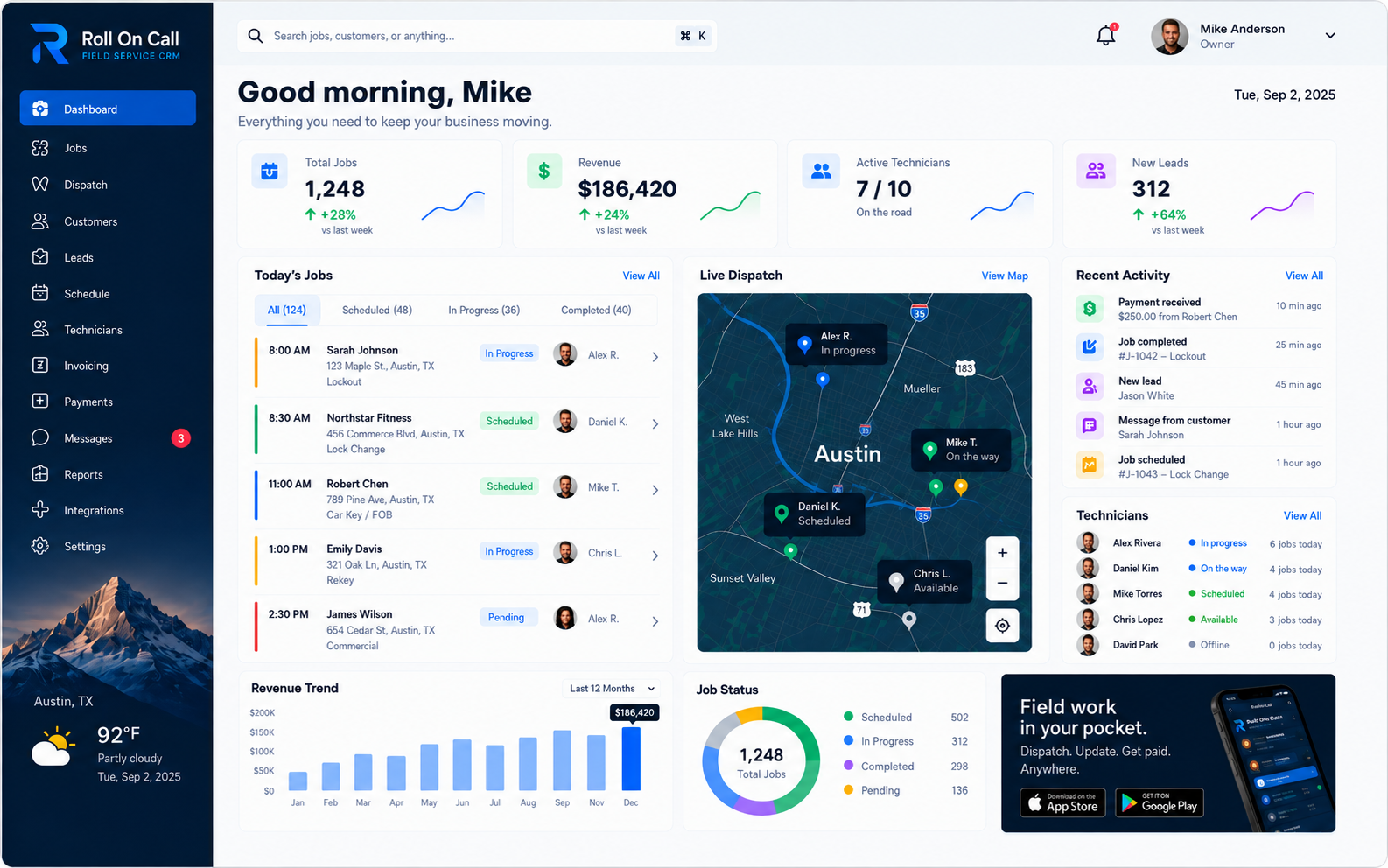
Operational Templates
Service operations rely on predictable communication. When an office coordinates multiple technicians across different locations, the quality of the service depends heavily on how information is gathered and transmitted. Operational templates provide a necessary framework for this process. Instead, they serve as a structural baseline that helps prompt staff to capture necessary details consistently during each interaction. By standardizing the format of work orders, customer intake forms, and service records, a business may reduce errors and simplify the handoff between the office and the field.
The resources in this hub focus on practical applications, examining how structured forms support dispatchers and managers who must make rapid decisions based on the facts in front of them. Software can present the blank fields, but it is up to the trained professional to ask the right questions, interpret the answers, and enter useful data. A template is only as useful as the discipline of the team using it.
Whether a company is transitioning from paper notebooks to a shared digital workspace or simply refining its current digital procedures, establishing clear expectations for data entry is a vital step. The materials provided here will help you understand when to rely on a template, how to adapt it for unusual situations, and why maintaining a consistent standard supports reliability.
Why Consistency Matters in Intake and Dispatch
The intake process is the first critical juncture in a service job. When a customer calls with a problem, the dispatcher must quickly establish the identity of the caller, the nature of the issue, and the physical location where the work will take place. An intake template guides this conversation by prompting the dispatcher to collect necessary information in a logical order. This consistency helps prompt staff to notice oversights, such as forgetting to ask for a gate code or failing to confirm the billing address before scheduling the visit.
Consistency heavily impacts dispatch efficiency. When all service requests follow a similar structural format on the scheduling board, the dispatcher can evaluate priorities much faster. They know where to look to find the urgency level, the required trade skill, and the estimated duration of the job. This uniform presentation allows the operator to weigh competing demands and make scheduling decisions without having to decipher a unique block of freeform text for every appointment.
However, consistency does not mean treating all calls identically. The template provides the baseline, but the dispatcher must still listen to the customer and adjust their approach accordingly. If a caller is describing an active water leak, the dispatcher knows to bypass standard conversational pleasantries and move immediately to safety instructions and emergency scheduling. The template supports the process, but the dispatcher directs the response.
The Boundary Between Structure and Judgment
A recurring theme in effective field service management is understanding the boundary between what software does and what people do. Templates belong firmly in the realm of software. They act as visual prompts, organizing data fields and suggesting categories for the user. They do not, however, replace the need for judgment. A required field for an issue description can only store what the dispatcher chooses to type into it. If the entered text is vague or misleading, the template cannot correct it.
Implementing a comprehensive template does not automatically improve service quality. The structure only highlights information; the office staff must review and correct the entered information so it remains useful. A dispatcher must know the difference between a routine maintenance request and a potential hazard, even if both fit into the same generic category in the software.
Recognizing this boundary helps businesses set realistic expectations for their tools. The goal of a template is to organize the known facts of a job so that the team can focus their mental energy on solving the reported problems. By removing the administrative burden of remembering what questions to ask, the template frees the dispatcher to provide better customer service and more intelligent scheduling.
Adapting Templates to the Physical Reality
No single form can account for every possible scenario in the physical world. While templates aim for standardization, they must remain flexible enough to accommodate the unpredictable nature of field service work. There are times when a rigid adherence to a standard template will hinder the operation. Knowing when to bypass or adapt a template is a critical skill for any experienced dispatcher.
If a technician arrives and discovers the scope of work is different than initially reported, the physical reality requires immediate action. The office must be able to adapt the existing record, append new notes, and adjust the schedule without being blocked by software constraints.
Similarly, emergency intake procedures often require a shortened version of the standard template. When rapid dispatch is the priority, the office may only need a name, a phone number, and a physical address to get a technician moving. The remaining details can be filled in later once the situation is addressed. A useful template system allows for these necessary deviations while acting as a staff-recorded reference of what was changed and when.
Supporting Office-to-Field Handoffs
The transition of a job from the office schedule to the field technician is a delicate procedure. The technician relies on the provided information to arrive at the correct location, understand the customer's problem, and bring the appropriate tools. This handoff is primarily facilitated by the work order, which serves as a specialized template designed for mobile consumption. A poorly structured handoff creates confusion, delays, and frustrated technicians.
A strong handoff template separates actionable field instructions from internal office notes. The technician does not typically need to see the history of the customer's billing disputes or the internal debate over scheduling priority. They need the current site contact, the address, the access instructions, and a clear description of the reported issue. Organizing this information logically reduces the time the technician spends reading a screen and increases the time they spend working on the reported problem.
Furthermore, the template should establish clear expectations for what the technician must report back to the office upon completion. Whether through SMS updates or a mobile web view, the technician must know which fields they are responsible for filling out before leaving the site. This might include recording the final resolution, documenting any parts used, and capturing a signature if required. The template acts as a communication framework, supporting both the office and the field as they manage their documentation.
Maintaining Useful Operational Records
The immediate benefit of a template is organizational clarity during the active job, but the long-term benefit relies on the creation of a staff-recorded reference. When a business uses consistent forms for months or years, they build a historical log that becomes increasingly valuable based on the quality of the entries. A structured history supports an office when addressing disputes, tracking recurring issues at specific locations, and providing a higher level of personalized service to returning customers.
If a property manager calls to report a problem with a commercial HVAC unit, the dispatcher can review the recorded templates from previous visits. Because the data was entered consistently, the dispatcher may locate the model number, the date of the last maintenance check, and the name of the technician who performed the work. This context transforms a generic service call into an informed, professional interaction.
However, this historical value depends on relevant staff entries and ongoing review. Management must actively review completed forms to check whether technicians and dispatchers are capturing the necessary data. The template provides the structure, but the team must commit to maintaining the information through regular review and correction.
Featured Resource: The Work Order Template
To provide a concrete example of these principles in action, we offer a detailed examination of the core operational document used in field service. The work order is the bridge between the customer's request and the technician's execution. It must balance the need for comprehensive detail with the requirement for mobile readability.
The Standard Work Order Template
Review our comprehensive guide to structuring field service work orders. Learn how to separate internal office notes from actionable field instructions, and discover which fields are essential for a safe and efficient dispatch.
View the Work Order TemplateOur featured resource breaks down the anatomy of a standard work order. It explains why specific fields are grouped together, how to separate customer contact details from physical site addresses, and how to structure the problem description so that it is useful to the person performing the labor. This guide is highly recommended for any business looking to standardize their dispatch communication.
You can review this primary resource by visiting the linked page above. It serves as a practical baseline that you can adapt to fit the specific terminology and requirements of your own trade.
Training Staff and Evaluating Forms
Introducing new templates to a service team requires deliberate training. It is a common mistake to simply deploy a new digital form and expect the staff to use it correctly without explanation. When people do not understand why they are being asked to collect certain information, they tend to view the data entry as an administrative chore. They will find ways to bypass fields, use placeholder text, or leave critical sections blank.
Effective training focuses on the underlying purpose of the template. A dispatcher needs to know that capturing a secondary phone number is not just a software requirement; it is the backup plan for when the primary contact fails to answer the door. By connecting the blank fields on the screen to real physical consequences, management can build a culture of consistent habits.
Most established service businesses already use some form of template. Periodically auditing these existing forms is a healthy practice. Over time, templates tend to accumulate unnecessary fields as new rules are added without ever removing old ones. An effective evaluation asks a simple question of every field on the form: what business decision does this information support? By collaborating on the design of the form, the business helps shape a final product that respects the time of everyone involved while prompting for the details needed to complete the work.
Summary and Next Steps
Operational templates are foundational tools for coordinating a mobile workforce. They bring order to the chaotic intake process, support rapid scheduling decisions, and help technicians receive clear, actionable instructions. When used consistently, they support a historical reference that enhances customer service and provides context during disputes.
However, templates remain strictly structural. They rely heavily on human professionals to ask probing questions, apply trade knowledge, and adapt to unpredictable physical realities. Diagnosing a broken machine and reassuring an anxious property owner is the technician's craft. The forms simply organize the facts so that the staff can do the work.
We invite you to explore the featured Work Order Template to see these concepts applied in a practical format. Use this hub as a reference point as you evaluate your current procedures, train your team, and build a more resilient service operation.