
01The Core Principles of Emergency Service
Urgent property-service work compresses ordinary decisions into a short period. The office still needs to understand who is calling, where service is needed, what the customer has observed, and what access information may matter. It also needs to consider work already promised to other customers. A useful process turns that conversation into a concise record, then leaves scheduling and assignment judgment with the people responsible for operations.
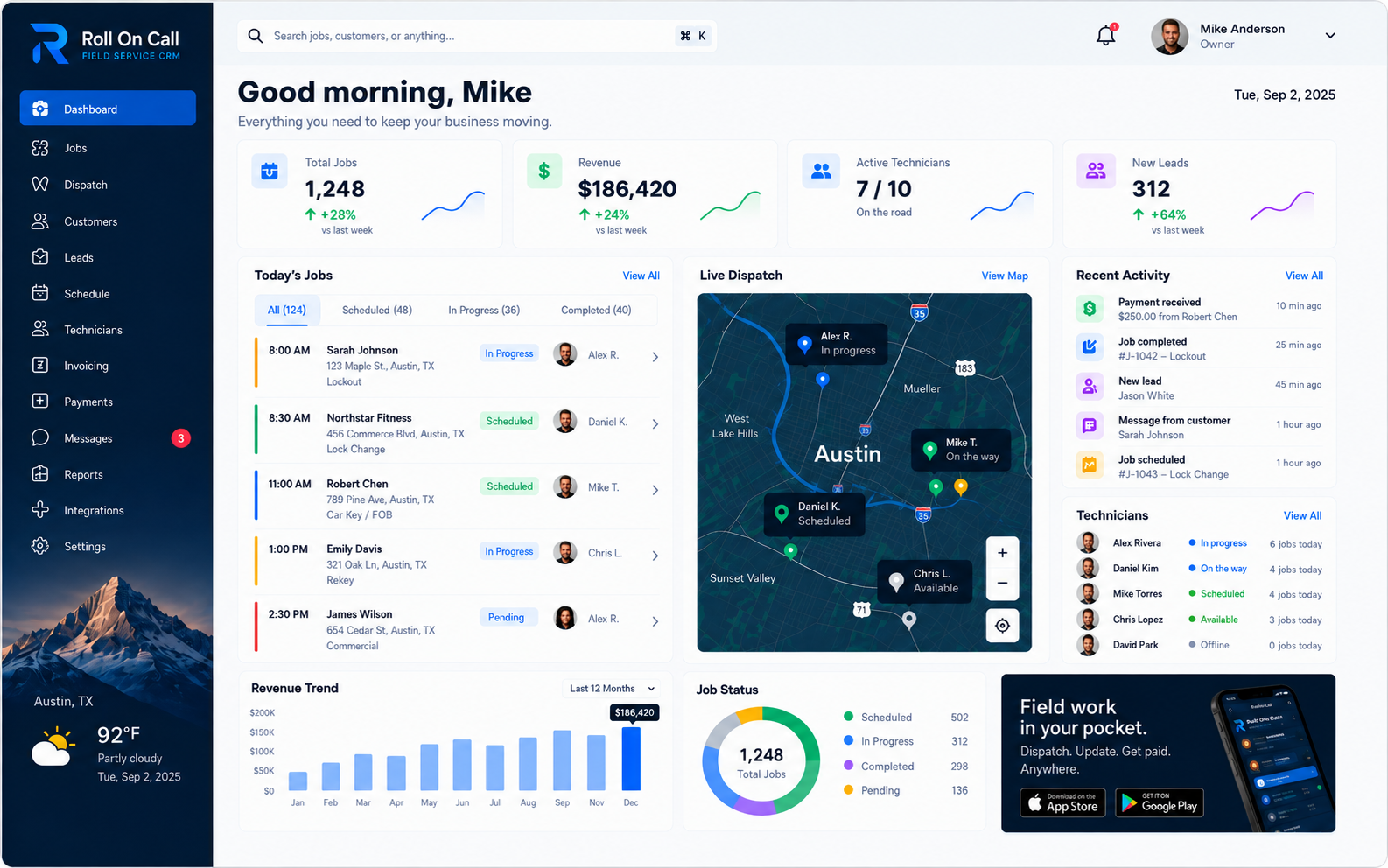
Roll On Call supports that process by keeping staff-recorded intake context, the service address, customer-reported scope, and notes or instructions with the job. Authorized users can then make schedule and assignment changes. The value is not a machine-made decision. It is a cleaner shared record that helps the team discuss the same facts and preserve the plan it has chosen.
Strong emergency-service practice therefore begins with ownership. Name the person who records the call, the person who can change the schedule, and the person who confirms the handoff. Agree on what belongs in a job brief and when the office should make direct contact. Software can make the record easier to use, but disciplined people keep it current. For the wider operating model, read our field service management software guide.
02Urgent Intake and Call Handling
A composed intake conversation is more useful than a long one. Start with the caller's identity and callback information, then confirm the service address in full. Ask the customer to describe what they can see, hear, or smell in their own words. Record those observations as customer-reported scope rather than presenting them as a diagnosis. That distinction gives the field professional context without turning an office note into a technical conclusion.
Follow with practical questions that help the team understand access and scale. Which unit, floor, room, or piece of equipment is involved? When was the issue first noticed? Has anything changed since the call began? Is there a gate, tenant contact, building entrance, or parking instruction that the assigned worker will need? Avoid leading questions. Concise, attributed notes are easier for the next person to interpret correctly.
Close the call by restating the address and the main reported issue. Explain only the next step the business is prepared to take, such as having the office review the request or contacting the customer after an assignment decision. Do not turn an internal plan into a promise that the team has not approved. The intake record should be factual, readable, and useful to anyone who must continue the work.
03Staff-Recorded Intake Context
Once the conversation ends, the record becomes the handoff. Staff can capture the urgent intake context and notes or instructions that the team needs to retain. A good entry separates the caller's report from the office's actions. For example, write that the customer reported water near a fixture, then separately note that the office called the designated team member. Clear attribution reduces ambiguity later.
Useful notes are specific without becoming speculative. Include the affected area, reported symptoms, approximate start time if known, and access details supplied by the customer. Identify uncertainty directly with phrases such as “customer is unsure” or “office has not confirmed.” Avoid dramatic adjectives and unsupported conclusions. The objective is to preserve context that a service professional can evaluate, not to diagnose the issue from a phone conversation.
Keep the entry easy to scan. Put the address and customer-reported scope first, then access instructions and other notes. If the situation changes, add current context rather than obscuring the original report. The people managing the work stay in charge of reviewing the information, deciding what it means for the schedule, and communicating the decision to the appropriate team member.
04Establishing the Service Address and Scope
The service address deserves its own verification step. Repeat the street number, street name, unit or suite, locality, and postal code as applicable. For campuses, multi-building properties, and managed sites, ask for the building name or entrance the customer expects the worker to use. Record only access information the customer or team has supplied, and note whom the worker should contact if entry is restricted.
Scope should remain faithful to what the customer reported. “No cooling on the second floor” is more useful than an assumed component failure. “Water visible below the sink” is clearer than an unverified cause. If the office has agreed on a particular visit objective, staff can include that instruction, but it should not be confused with the customer's description. This separation helps the assigned professional approach the visit with context and room for on-site judgment.
Before assignment, one staff member should review the address, callback information, scope, and access notes as a set. A small correction at this stage can prevent a confusing handoff. Roll On Call retains the details entered by the team, so accuracy depends on careful confirmation and timely edits. For a broader look at organizing job records, visit our job management solutions page.
05Dispatch Decisions
An urgent request creates a business decision, not merely a data-entry task. The dispatcher or manager reviews the recorded context alongside the commitments already on the schedule. They consider the trade knowledge required, the information available about current work, customer obligations, and the team's own operating policies. Those factors require local knowledge that belongs with the people accountable for service.
After deciding, an authorized user can change the schedule and assignment in Roll On Call. The recorded plan should match what the office has actually communicated. If a manager is still seeking confirmation, staff should avoid treating a tentative assignment as settled. A short internal note can preserve important context, such as who made the decision or which customer conversation still needs to happen.
The handoff is complete only under the business's own communication procedure. For some teams, that means a direct call. Others may require a reply through an established channel. The important practice is consistency: update the record, contact the assigned person, and resolve any conflict between the recorded plan and what the team has confirmed. Roll On Call supports the shared record while people lead the decision.
06Rescheduling and Managing the Existing Board
Adding urgent work may affect several existing commitments. Before moving anything, review the jobs that share the relevant period and identify the customers who would be affected. Consider whether another authorized staff member needs to approve the change. Once the team has chosen a workable plan, update the schedule and assignment so the board reflects the decision rather than an earlier version of the day.
Treat each displaced appointment as a customer conversation, not as a block on a calendar. Review its recorded context before calling. Explain the change plainly, offer only timing the office has approved, and record the revised commitment. If the customer cannot accept the proposed change, bring that information back into the scheduling decision instead of leaving competing expectations unresolved.
A simple rescheduling checklist helps: identify affected work, decide who owns each customer call, make the approved schedule edits, and review the board once more for gaps or overlaps. When circumstances change again, repeat the same deliberate process. The goal is a schedule the team understands and customers have been told about. See our dispatch management page for related job context.
07SMS Technician Job Briefs
Once the assignment is settled, the office can send selected recorded details in an SMS job brief. A useful brief starts with the service address and customer-reported scope. It can also include selected access notes, contact context, and instructions chosen by the office. Keep the content relevant to the visit. The message should help the recipient understand the assignment without forcing them to sort through the full intake conversation.
Structure matters in a small format. Put the location first, follow with the reported issue, then include the few instructions that affect access or the agreed objective. Use plain language and identify customer statements as reports. Avoid unnecessary background, unexplained abbreviations, and sensitive details that do not belong in the field brief.
SMS is one part of the handoff, not the whole operating procedure. For time-sensitive assignments, use the business's established confirmation method and maintain a separate escalation contact path. The job record should remain the office's reference for what was recorded and selected for the brief.
08Communication Reliability and Escalation
Good communication plans account for imperfect channels. Build the team's procedure around that practical reality. Decide in advance which assignments require direct confirmation, who follows up, and what alternate contact method staff should use when the first attempt does not produce a response.
Keep escalation rules proportionate and easy to follow. A written playbook might name the primary contact, backup contact, office decision-maker, and approved communication channels for nights and weekends. It should also explain when an unconfirmed assignment returns to the dispatcher for a new human decision. This keeps staff from improvising under pressure and makes responsibility visible.
Review these practices with both office and field staff. Agree on what constitutes confirmation, where corrected instructions should be recorded, and who tells the customer when a plan changes. Periodic review is especially useful after staffing changes or a difficult handoff. For more ideas on clear field communication, visit our technician communication page.
09After-Hours Operating Procedures
After-hours service works best when the procedure is written before the phone rings. Define who accepts requests, where that person finds the current on-call plan, which manager can authorize schedule changes, and how a field handoff is confirmed. Keep the on-call plan and contact ownership current through the business's chosen process. Roll On Call can hold the job's recorded intake context, but people stay in charge of applying the plan.
The intake standard should remain consistent at night: confirm the caller, callback information, full service address, customer-reported scope, and relevant access instructions. Ask only the practical questions the business has approved. Then consult the current on-call information, contact the designated person, and record the resulting schedule or assignment decision after it has been made.
Before ending the handoff, verify that the office record, customer communication, and field instruction describe the same plan. If contact cannot be confirmed, return the issue to the named decision-maker in the after-hours procedure rather than guessing. The next business-day team should also have enough completion context to understand what occurred and what remains. See our field workforce management guide for broader team practices.
10Team-Recorded Active Job Status
Job status is most useful when everyone understands that it is a recorded statement. An authorized user or team member enters the status based on the team's operating practice. The office can use that entry as shared context while handling the schedule and customer communication. It should be read alongside notes and direct communication when the situation requires more detail.
Define internal expectations for who records changes and when. For example, the office may own updates during schedule changes while another authorized team member supplies later progress context. The exact practice belongs to the business. What matters is that a named person owns the update and that staff do not infer more from a recorded status than the team has actually supplied.
When the board and a direct conversation disagree, confirm the current situation and correct the record. Stale information should not quietly carry into the next assignment decision. A brief end-of-shift review can identify jobs whose status or notes need attention. This modest discipline gives the next dispatcher a more dependable starting point without pretending the record is evidence beyond what users entered.
11On-Site Coordination and Notes
Customer-reported scope is a starting point, and the service professional's on-site understanding may be different. When new information affects the expected work or timing, the field and office teams should communicate through their established process. An authorized user can add notes or instructions to preserve the updated context, then the dispatcher can decide whether the schedule or assignment needs to change.
On-site notes should focus on the information the next responsible person needs. Record what the team reports, any approved change to the visit objective, customer instructions relevant to access or follow-up, and the person who owns the next action. Use direct language. If an observation has not been confirmed by the office, attribute it to the person who supplied it rather than polishing it into a settled conclusion.
Notes also need restraint. Repeating the entire intake can bury the meaningful update, while vague shorthand can leave the office guessing. A concise entry that states what changed, how it affects the current plan, and who is responsible for follow-up is usually more valuable. Staff must still read the entry and act according to the business's procedures. Explore our CRM guide for more on maintaining useful customer records.
12Work Completion and Handoffs
The end of a field visit and the end of the customer's service need are not always the same. Completion context should state what the team reported as finished, what remains, and whether the office needs to review a future visit. This distinction helps the next staff member understand the record without assuming that every operational or customer commitment has been resolved.
An authorized user or team member can record the job status and relevant completion context. If a return visit is agreed, the office should record the new plan clearly and communicate it to the customer and assigned person through its normal process.
A practical handoff answers four questions: what was reported complete, what remains open, who owns the next decision, and what the customer has been told. Keep those answers specific and avoid relying on status alone when additional context matters. A daily review of recently updated work can catch incomplete notes and unresolved scheduling decisions before they disappear into the next day's workload.
13Invoices and Payment Status
Emergency work is often billed the same day. Once the job is complete, the office or technician can create the invoice from the job record, including any after-hours rate the business charges.
Customers can pay the invoice by card through Stripe. The job shows whether its invoice is unsent, sent, paid or overdue, so the office can see at a glance which completed work is still open.
Decide in advance who may adjust an emergency invoice and how disputes are handled, and write that down. The software keeps the invoice, payment and job together; the policy is yours.
14Operating Standards and Record Quality
A premium operating process is usually a simple one practiced consistently. Document the minimum intake fields, who may change schedules and assignments, what belongs in an SMS job brief, who can record status, and how completion context is reviewed. Train staff on the reason for each step, not only the mechanics. Clear ownership makes urgent work easier to audit and easier to hand off.
Review record quality with a short, recurring sample. Check whether addresses are complete, customer reports are clearly attributed, instructions are concise, schedule changes match team communication, and completion entries identify open work. Use recurring mistakes to improve the intake script or handoff checklist. The aim is not more documentation. It is better information at the moment another person needs to act.
Roll On Call supports staff-recorded intake, schedule and assignment changes, SMS job briefs, team-job status, completion context, and invoice and payment status. That focused role works best beside clear business procedures and direct professional judgment. Explore the complete features overview or browse our industries page for additional context.